Every project starts with a problem you can't stop thinking about.
Mine was simple: I wanted a compact, silent, capable home gym computer — something that could run training analytics, display metrics on a wall-mounted monitor, and not sound like a server rack. Nothing on the market fit. Either too loud, too weak, or too expensive.
So I started building one.
The First Prototype
The first unit was rough. A bare ITX board zip-tied to a piece of plywood, running off a salvaged PSU. It worked, sort of. Fan noise was terrible. Thermals were worse.
But it ran. And it ran fast enough — which is the only thing that matters in a first prototype.
prototype-001/
├── ASRock Z690 Phantom Gaming-ITX
├── i5-12600K (stock cooler, regrettable)
├── 32GB DDR5 5200
└── 512GB NVMe
The Noctua Mod
The noise problem had one obvious solution: replace everything with Noctua. Three A12x25 fans, a NH-L9i, and suddenly the unit was whisper quiet under load.
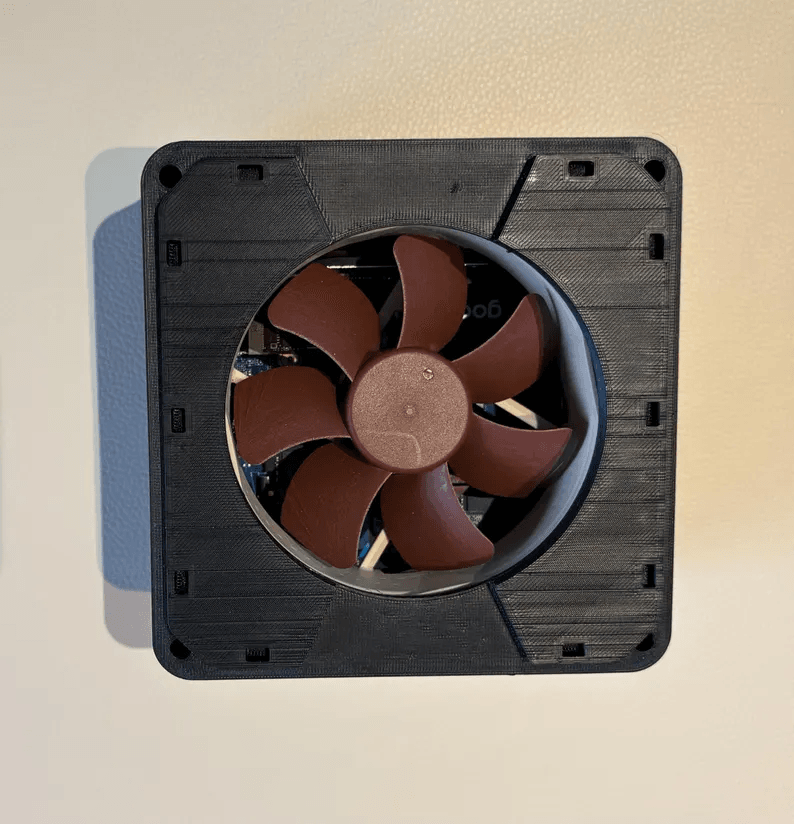
That mod became the +Noctua tier you see in the store today.
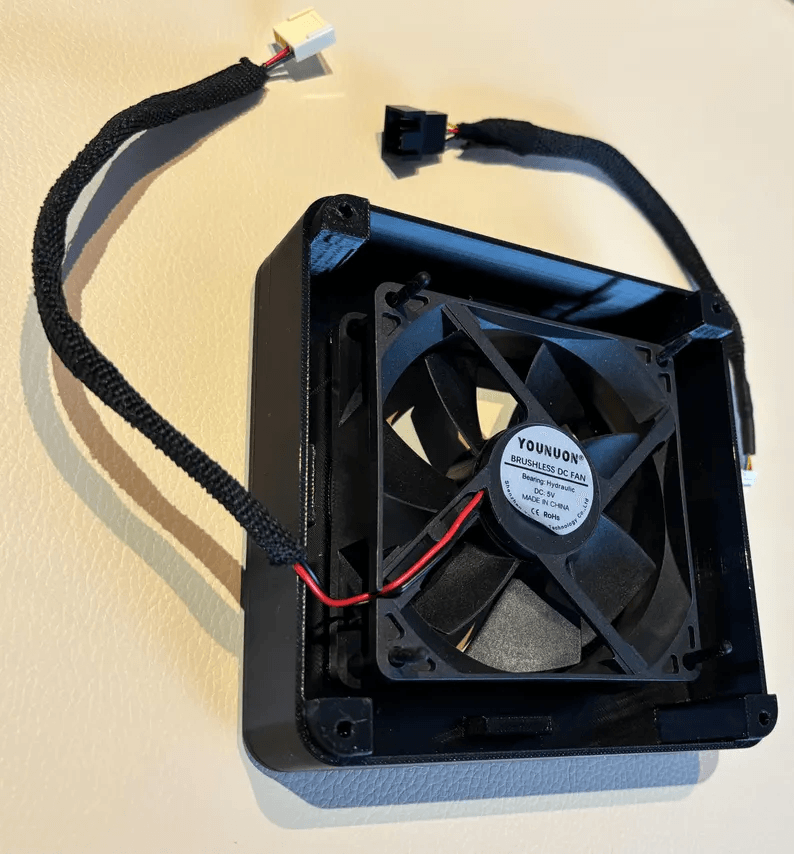
The Enclosure
Once the thermals were sorted, the enclosure became the focus. The goal was a box that looks like it belongs in a rack, not under a desk.
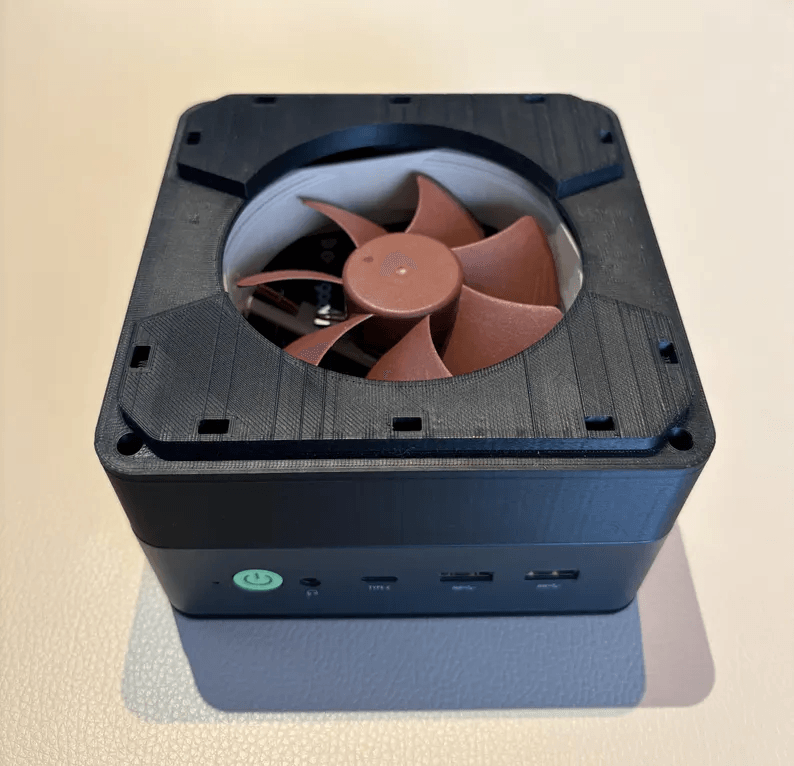
The STL files for the custom enclosure are almost ready. Once those are published, anyone with a printer can build the housing themselves. The goal is a fully open hardware stack — you buy the silicon and the build log, we provide the rest.
More soon.